
Earth Science Week Classroom Activities
Oil Behavior on Beach Sediment
Activity Source: NOAA
Grade levels: 4-9
Introduction
Beaches are made up of sediments, which can range from fine-grained clay and mud, to coarse-grained sand or gravel. In this activity, you will explore how lighter and heavier oils behave differently when spilled onto fine-grained, medium-grained, and coarse-grained sediment.
When NOAA responds to an oil spill, the differences in how oil behaves on various sediments are important. These differences affect our predictions of what the oil will do if it reaches the beach: Is it likely to remain on the beach surface? How much will it penetrate into the beach sediment? It’s much harder to clean up oil that quickly sinks into the sediment than oil that stays on the beach surface. When we expect spilled oil to sink in quickly, we know that it must be cleaned up as quickly as possible.
In this experiment, you will use molasses to simulate a heavy oil, such as a fuel oil for ships, and mineral oil to simulate a lighter oil, such as a light crude or diesel oil.
Materials
-
3 wide-mouth containers
-
measuring cup
-
coarse-grained sand or gravel
-
medium- to fine-grained sand
-
clay or mud
-
molasses
-
mineral oil
Instructions
- Fill each container about two-thirds full with one of the three sediment types.
- In each container, create two slight but uniform depressions by pressing your finger or another small object in each container.
- Measure out equal volumes of molasses and mineral oil.
- Choose one of the sediments. At the same time, pour the molasses into one of the depressions and mineral oil into the other.
- Observe the immediate behavior of the liquids.
- Do they penetrate the sediment? How fast does this happen?
- What differences between the two liquids do you see?
- Repeat these steps for the other two sediments, and then compare the results.
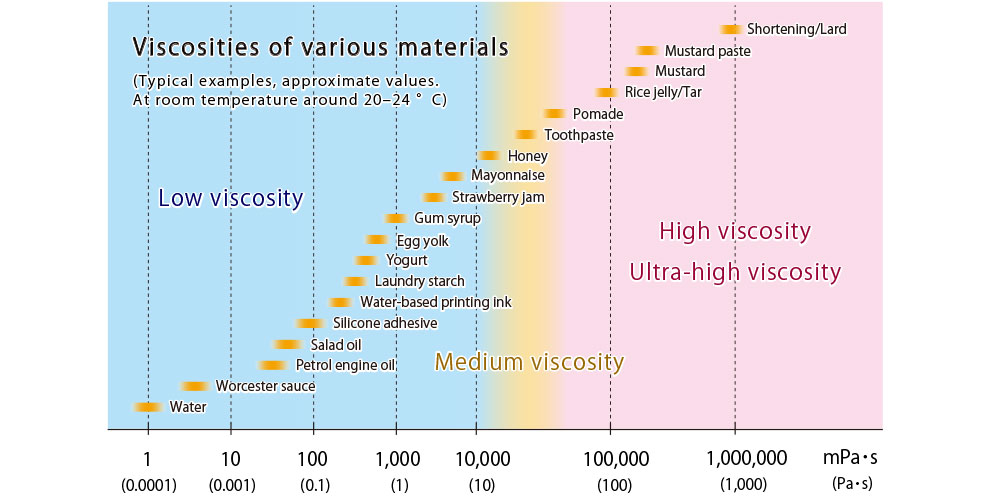
- Study the graph below to consider the viscosities of different liquids.
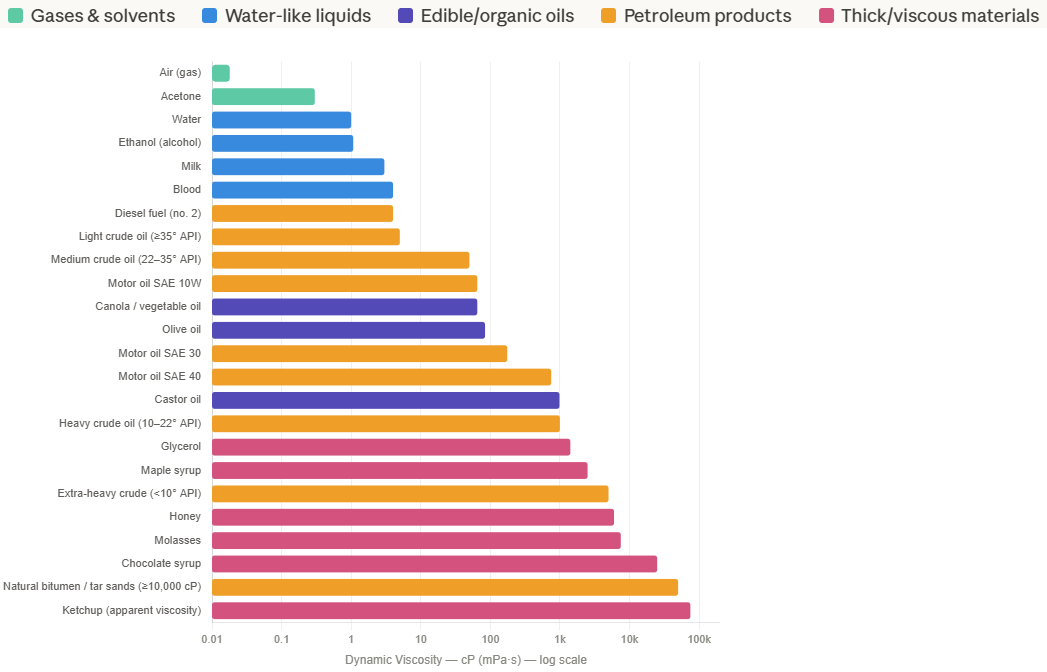
Data Sources: Understanding Oil Viscosity Ratings and About Viscosisties
Notes for Teachers
Click here to view additional background information and notes on conducting this activity.
Activity Notes
-
You can perform this experiment using either wet or dry sediment, or you can run it twice—once with wet sediment and once with dry—and then compare your results.
-
You’ll probably find that the molasses penetrates very slowly, especially into the most fine-grained sediment (the clay or mud), while the mineral oil penetrates faster. You are also likely to find that the coarser the grain size of the sediment, the faster it is penetrated.
Additional Background: What is sand made of?
Sand comes from many locations, sources, and environments. Sand forms when rocks break down from weathering and eroding over thousands and even millions of years.
The tan color of most sand beaches is the result of iron oxide, which can be found in quartz and feldspar. Black sand comes from eroded volcanic material such as lava, basalt rocks, and other dark-colored rocks and minerals. Pink sand results from the decay of single-celled, shelled organisms called foraminifera. The famous white-sand beaches of Hawaiʻi actually come from the poop of parrotfish, who scrape algae off of dead corals.
Analysis
-
In this activity, what minerals were your sediments made of?
- How do you think the composition of your sediments impacted your results?
- Try the experiment again with sediments of the same grain size but made of different materials.
- You might also repeat the experiment with fluids of different viscosities.
-
In what ways might oil behave differently on a sandy beach versus a muddy wetland, and why does that matter for cleanup efforts?
Extension
Find more activities from NOAA’s Office of Response and Restoration. Explore all of NOAA’s educational resources.
Next Generation Sceince Standards Connections
- SEP: Planning and Carrying Out Investigations
- DCI: PS1.A: Structure and Properties of Matter
- CCC: Cause and Effect; Patterns