
Earth Science Week Classroom Activities
Power Up with Critical Minerals
Activity Source: U.S. Geological Survey
Grade Level: 6-12
Materials
-
Computer with internet access
-
(4) Large sheets of poster paper
-
Tape or glue
-
Sticky notes, two colors
-
Pencil/pen
-
Markers
-
Printed copies of the Suplemental Resources file:
- (1) battery type diagram per group:
- alkaline battery
- lithium-ion battery
- nickel-cadmium (NiCd) battery
- lead-acid battery
- (1) U.S. Map per group
- (1) Systems-Deposits-Commodities Table per group
- (1) battery type diagram per group:
Procedure
Identifying Critical Minerals in Batteries
Critical minerals are minerals, elements, substances, or materials that (1) are necessary for the economic or national security of the United States, (2) have supply chains at risk to disruption, and (3) are vital for making a product without which the economic or national security of the United States would suffer (Energy Act 2020, Public Law 118-233).
- Working in four groups, assign a battery diagram, poster, U.S. map, and sticky notes to each group. Tape or glue the battery diagram to the poster paper; refer to Figure 1 below for an example.
- Use the Federal Register: Final 2025 List of Critical Minerals to identify the critical minerals contained in each battery. Write the name of each identified critical mineral in the battery on a sticky note (color #1) and stick them on to the poster board below the battery diagram.
Sources and Trade of Critical Minerals
Each of the critical minerals you identified is important for storing and releasing energy in the battery, but critical minerals are used in a variety of other ways.
- Use the USGS About the 2025 List of Critical Minerals page to look up other uses for each of the critical minerals in your battery. On the poster, write 2-3 uses for each critical mineral below its sticky note. Note: you may need to click on the critical mineral hyperlinks to find more information on other uses for the critical minerals.
- As a group, choose one of the critical minerals that you identified in the battery to investigate in detail. Write the name of this critical mineral on a different sticky note (color #2) and replace the color #1 sticky note with this one on the poster. Please Note: metallurgical coal is not present in the Minerals Commodity Summaries. Do not choose this critical mineral to investigate further if assigned the nickel-cadmium battery.
- Open the 2026 USGS Mineral Commodity Summaries web tool. Mineral commodities are minerals (or materials derived from minerals) that are bought and sold. Click on Trade News in the gray navigation bar. Scroll down to the U.S. Net Import Reliance Dashboard. Net import reliance refers to the percentage of a mineral commodity consumed in the United States that we get from other countries. Leading import sources are the main countries that the U.S. imports minerals and mineral commodities from.
- Click on the table below the world map to activate the scrolling feature for the table. Find your chosen critical mineral by scrolling through the Commodity column. Answer the following questions by looking at the Net Import Reliance (%) column and the Leading Import Sources (2020-2024) column for the chosen critical mineral. Write the answers on your poster.
- What is the net import reliance (%) for this critical mineral?
- List the top three countries from where the U.S. imports this critical mineral.
- Return to the top of the 2026 USGS Mineral Commodity Summaries page and click on 2026 Mineral Commodities in the gray navigation bar. Click on the name/image of the chosen critical mineral to open a window with information about that commodity. Click on Domestic Production & Use and use the information found in the section to answer the following question.
- Is the critical mineral produced or mined in any U.S. state? If so, list up to three of the top producing states.
Production of Critical Minerals
Geologically, multiple minerals are often found in the same place as part of a mineral system. Mines may target one or more minerals in a single ore deposit. A byproduct is material recovered during mining processes but is not the primary commodity or product of mining operations. The value byproducts contribute to the revenue of a mining operation is insignificant compared to the primary product. Co-products are commodities that are mined together and the value of both is needed to support the mining operation. For example, the critical mineral silver can be a byproduct or a co-product in zinc, lead, copper, and/or gold mining. Another example is lead and zinc, which are often concentrated in the same ore deposits and both must be recovered in order to make mining those deposits economically feasible.
- Open the Federal Register: Final 2025 List of Critical Minerals. Scroll down to the “Mineral commodities for inclusion on the final 2025 List of Critical Minerals” table. Find the chosen critical mineral in the table and use the information in the Produced as a byproduct/co-product and the Main host commodities for byproducts/co-products columns to answer the questions below.
- Is the chosen critical mineral recovered as a primary product or a co-product/byproduct?
- If the chosen critical mineral is recovered as a byproduct, what is primary product(s) with which it is found?
- Use the Systems-Deposits-Commodities Table to find all the Mineral Systems that list your chosen critical mineral in the Mineral Commodities column.
- Open the Earth MRI focus areas interactive web tool. In the “Focus areas by mineral system” section, check the box next to each Mineral System that contains your chosen critical mineral to make those focus areas appear on the map of the United States. Note: make sure to zoom out enough so Alaska and Hawaii are visible on the screen.
- On your blank U.S. map, color or shade in the areas, using only one color, where the chosen critical mineral occurs or may occur according to what you see using the Earth MRI focus areas interactive web tool. Attach the map to the poster.
- Using any of the resources used in this activity (About the 2025 List of Critical Minerals | U.S. Geological Survey, Federal Register: Final 2025 List of Critical Minerals, or 2026 USGS Mineral Commodity Summaries web tool), find a fact you find interesting about your chosen critical mineral and write it below the U.S. map on your poster.
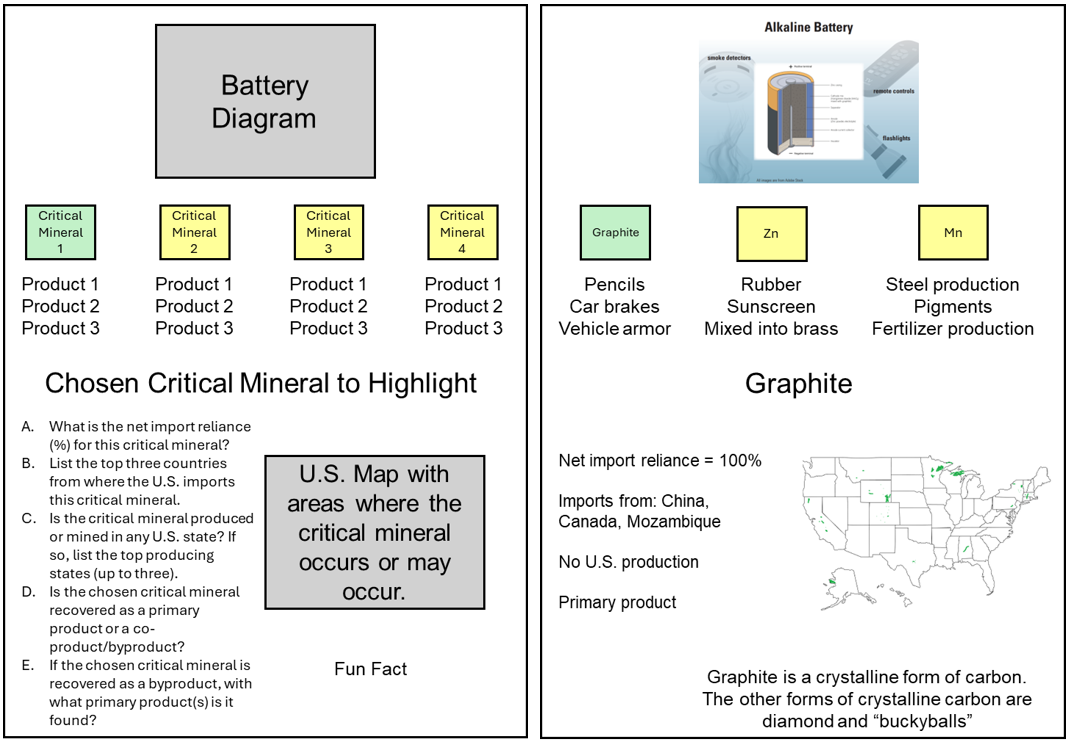
Figure 1: Example of layout for finished group poster.
Analysis
- Groups should take turns presenting their battery poster to the class.
- Looking at the uses for each battery type on the battery diagram, the class should discuss why they think there are different types of batteries.
- The class should compare the critical minerals found in each type of battery. Are there any minerals that are unique to specific types of batteries or common to multiple types of batteries?
- What might be the pros and cons of sourcing minerals from the United States versus from other countries?
- What could be some of the reasons why some minerals might come from the United States while others don’t?
Further Steps
Explore the U.S. Mineral Industry of your state using the 2026 USGS Mineral Commodity Summaries web tool.
- In the 2026 USGS Mineral Commodity Summaries web tool, click on Production Trends in the gray navigation bar. Scroll down to the Value of Nonfuel Mineral Production section and click on the table/map section to interact.
- Click on the state you live in to open a window with Nonfuel Mineral Production data for your state.
- Where does your state rank among U.S. states for nonfuel mineral production in 2025?
- What nonfuel mineral commodities does your state produce?
- Are any of these commodities on the 2025 List of Critical Minerals?
- At the top of the table/map section click on the Historical Mineral Commodity Summaries tab.
- Click on the state you live in to open a window with the Nonfuel Mineral Production historical data for your state.
- Scroll down in the window to the section Production trend, 2021-2025.
- Has your state ever held a higher rank for nonfuel mineral production? If yes, in what year(s)?
Links Used in this Activity:
- Educational Resources from the USGS Geology, Energy, and Minerals Mission Area
- USGS 2026 Mineral Commodities Summary
- Federal register: Final 2025 List of Critical Minerals
- Earth MRI focus areas interactive web tool
- About the 2025 List of Critical Minerals
- USGS Critical Minerals Atlas
Next Generation Sceince Standards Connections
- SEP: Analyzing and Interpreting Data
- DCI: ESS3.A: Natural Resources
- CCC: Patterns; Scale, Proportion, and Quantity