Earth Science Week Newsletter

Throughout the year, updates will be posted to share important dates and events related to the upcoming Earth Science Week celebration. Subscribe to receive newsletter updates by e-mail.
American Geosciences Institute, March 2026
Earth Day Webinar to Kick-off Earth Science Week 2026
To celebrate the 2026 Earth Day theme, “Our Power, Our Planet,” AGI will host a free webinar, “Solar Energy and the Minerals Behind It”, on Wednesday, April 22 at 1 PM ET on YouTube Live Premiere. Aimed at the general public and the education community, this webinar bridges scientific expertise and accessible learning to inspire the next generation of energy innovators and informed citizens. Presentations will span climate education’s role in the energy transition, current and emerging solar technologies, and the critical minerals and the mining workforce that make it possible.
The webinar will feature presentations from:
- Dennis Nolasco, Education Coordinator, EARTHDAY.org
- Ella Nielsen, Programs Director at American Solar Energy Society
- Diana Gragg, Managing Director Explore Energy, Precourt Institute for Energy, Stanford University
- Sarah Hayes, Research Chemist, U.S. Geological Survey Geology, Energy & Minerals (GEM) Science Center
- Thomas Lograsso, Director of the Critical Materials Innovation Hub, Ames National Laboratory
- Celeste Stroup, Manager of Education and Workforce Development, Critical Materials Innovation Hub, Colorado School of Mines
- Ed Robeck, Director of Education and Outreach, American Geosciences Institute
Registration for the Earth Day webinar is now open! Click here to register.
The webinar serves as a kickoff to Earth Science Week (ESW) 2026 (October 11-17) as AGI and our ESW Partners start to release NEW educational resources on the theme, “Critical Minerals for A Thriving Society.”
As we plan for the 2026 celebration, we would like to encourage you to consider hosting or attending an event, in addition to helping us spread the word about our ESW Contests, Webinar Series, and Toolkit, which contains an array of educational resources.
Please email resources, events, and/or inquiries to info@earthsciweek.org
Celebrating Earth Science Week All Year Round
AGI has many resources to help you celebrate and learn more about earth science all year round. Check out the monthly activities created by our ESW partners in the 2025-2026 ESW Calendar:
-
The April activity from the U.S. Geological Survey has grade 7-10 students analyze power resources and types of power plants around the U.S.
-
The May activity from the American Geophysical Union asks grade 3-6 students to conduct an investigation on energy transfer between the environment and their school.
-
The June activity from the Society for Exploration Geophysicists EVOLVE program, which features an investigation into seismic profiles for grade 6-10 students.
The calendar also highlights earth science related days and events, such as:
- April 22, 2026: Earth Day, sponsored by EARTHDAY.org
- May 4-10, 2026: Air Quality Awareness Week, sponsored by the U.S. Environmental Protection Agency
- June 8, 2026: World Oceans Day, sponsored by the United Nations
For Current (and Future!) Visible Geology Users
Good news for Visible Geology users! You can now sign in using your Google account, replacing Seequent ID for a simpler and more streamlined login experience.
If you currently access Visible Geology with a Seequent ID, be sure to sign in with your Seequent account first. Once logged in, you can easily link your Google account to keep access to your saved models, groups, and assignments. The process only takes a few minutes. Linking your accounts before signing in with Google for the first time will ensure everything you have created in Visible Geology stays right where you left it.
Get more details on linking your accounts at Visible Geology Google Login FAQ.
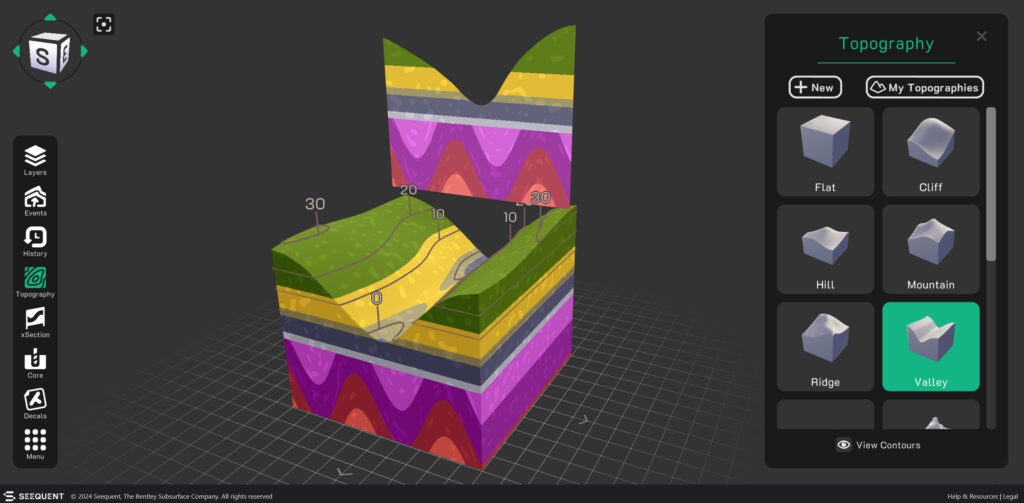
New to Visible Geology? Explore the growing collection of classroom-ready lessons developed for Earth Science Week over the years. These activities help students visualize and investigate geologic processes through interactive 3D models. And keep a lookout for new lessons that will be released this October!
My NASA Data’s Earth System Data Explorer
The Earth System Data Explorer (ESDE) is an Earth science data visualization tool created by My NASA Data to make accessing and visualizing satellite data simple and engaging. This interactive tool provides access to over 60 NASA datasets, enabling users to:
- create local and global maps,
- plot data trends from a given location,
- plot relationships between variables,
- compare maps side-by-side,
- generate data tables, and
- download data in user-friendly formats like CSV.
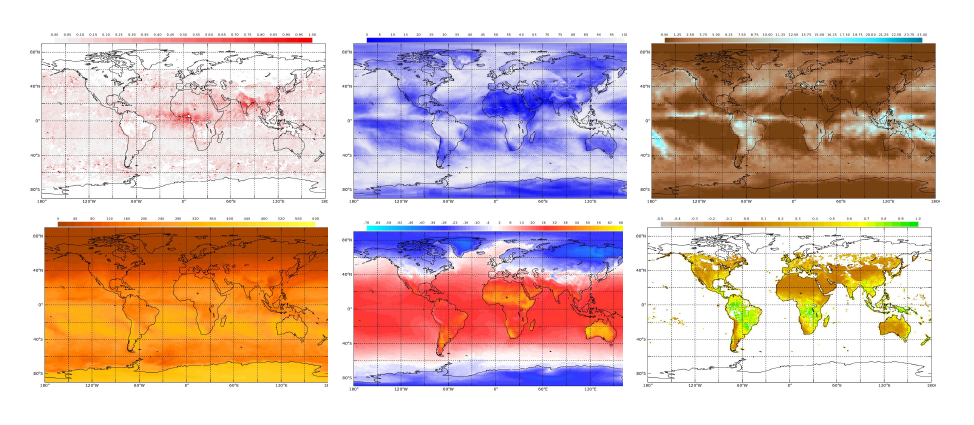
The ESDE’s plain-language summaries and intuitive user interface enable geoscientists, educators, or outreach professionals to seamlessly integrate Earth science data into lessons and presentations. The ESDE also allows learners to independently explore Earth system connections on local, regional, and global scales, which can foster curiosity and demonstrate how scientists investigate Earth system processes to learners of all ages with interactive, inquiry-driven experiences.
Datasets
The collection of datasets within the ESDE is organized by different spheres of the Earth System: Atmosphere, Biosphere, Cryosphere, Geosphere, Hydrosphere, and the Earth as a System. Most of the datasets available are global, monthly averages starting in the early 2000s. The historical nature of these datasets makes them perfect for analyzing regional trends and patterns. The data also provides authentic background for learners who want to make comparisons with their own local measurements. Some of the most popular geoscience topics that may be explored using the ESDE include:
- Earth’s energy budget
- Soil moisture
- Urban heat island effect
- Plant growth patterns
A complete list of the datasets available can be found on the Data Collections: Earth System Data Explorer page.
Additional Resources
Learn more about the Earth System Data Explorer and access classroom-ready lessons on the My NASA Data website.
Additional My NASA Data resources include lesson plans, mini lessons, StoryMaps, and data literacy cubes. Content on the website is arranged by sphere, as well as by Earth science phenomena frequently taught in K-12 classrooms, mirroring the organization of the datasets in the ESDE.
Updates for Earth Science Week 2026
Current Newletter | Febuary 2026 | Subscribe for future updates (6-7 per year)